







The changing world of payment transactions
Payment transactions are in a state of upheaval: the once stable earnings anchor for banks has turned into the largest field of innovation in the financial industry.
New players from outside the industry such as Apple, Amazon, Facebook and Google are entering the once closed market with investments totalling billions. Innovative FinTechs are launching new customer-orientated offerings on a monthly basis.
With the blessing of regulators, they connect to the established payments infrastructure of banks via open interfaces. At the same time, the payments infrastructure, in which banks have invested billions over decades, has suddenly become technologically outdated.
New standards, new technologies and constantly changing customer needs are shaping the market and the infrastructure. Pioneering trends and changes in both classical individual and retail payments as well as the innovative developments of new technologies in the areas of Internet of Things, blockchain and cloud are presenting banks with new challenges.
Digital Euro Unlocked
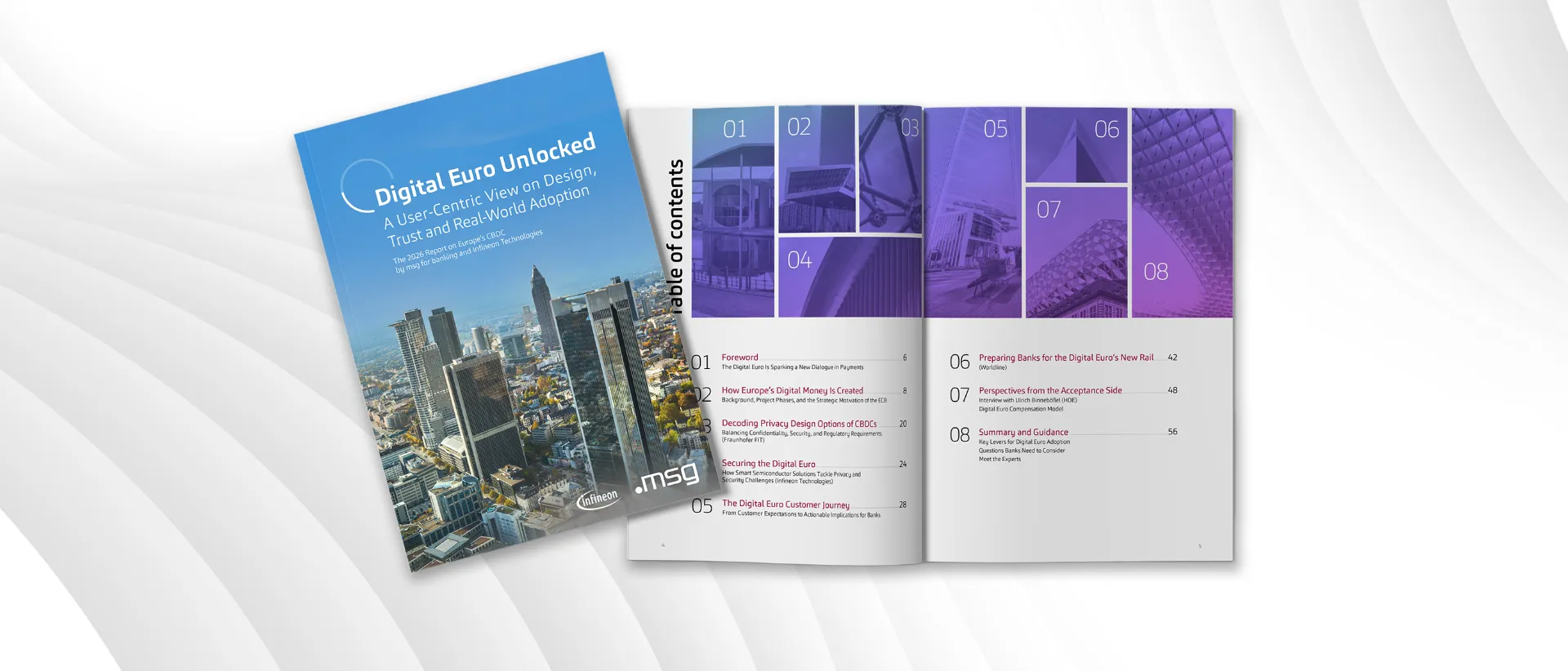
A user-centred perspective on design, trust and practical application
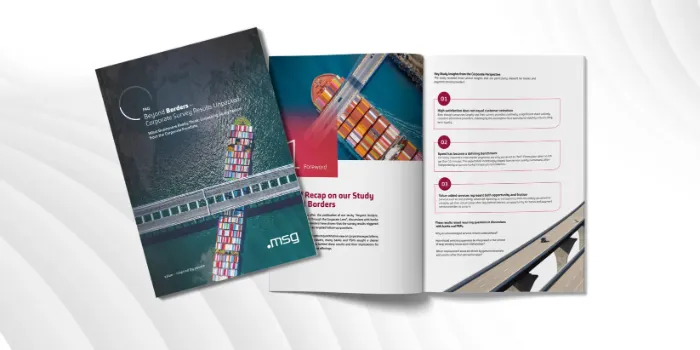
Beyond Borders

Cross-Border Payments Through the Corporate Lens - Today and Tomorrow
FIDA data as the key

How innovative use cases open up new perspectives
Range of services
With the introduction of the Instant Payments Regulation (IPR) on 8 April 2024, the EU has decided on the mandatory implementation of instant payments for all payment service providers. From 9 January 2025, all banks must be able to receive instant payments, and by 9 October 2025 they must enable active sending for all customer channels.
Instant payments are on their way to becoming the new standard. Time is of the essence and many banks do not yet have the necessary systems to be "instant-ready". The requirements are high and the pressure, both from legislation and from customers, is constantly increasing. Customers expect fast, smooth and simple payments - a challenge for many institutions that are still based on outdated systems.
Implementing this legal obligation often requires a complete reorientation and the use of modern technologies. The market is complex and highly competitive, and the search for the right solutions can be expensive. This is where msg for banking's experienced consultants and extensive partner network come into play. We offer you expert advice and customised solutions to get your systems up and running and meet the requirements of the IPR on time.
We offer you a very wide range of consulting and support services relating to all aspects of instant payments and are geared exclusively to your needs. Our consulting services include, among other things
- Identification of affected parties for mandatory participation in instant payments and definition of possible participation and connection models to TIPS or EBA RT1
- Support with provider selection and with the selection of a suitable operating model (in-house operation/SaaS/BPO)
- Advice on introducing instant payments into existing systems
- Project management, Business Analyse, Requirement Engineering und Payments Testing auf Basis der offiziellen Rulebooks und Guidelines
- Optimisation of instant payments processes and structures
- Training and Training on instant payments
Contact:
- Henrik Büttgen, Principal Business Consultant at msg for banking
- Christoph Mittmann, Senior Business Consultant at msg for banking
Numerous regulatory requirements as well as the change in payment transactions and the upcoming trends in the area of payments are pushing the historically evolved and mostly outdated payment transaction landscape of financial institutions to its limits. This is the right time to tackle atransformation of the payments landscape in order to support the strategic orientation of the respective financial institutions in the best possible way. Choosing the right sourcing strategy and thorough preparation are crucial.
We support our customers in all phases of their transformation projects, from strategy, design and implementation to commissioning.
Our consulting services include, among other things
- Development of a payments strategy taking into account the business objectives and requirements
- Evaluation of existing payment systems and the operating model
- Creation of a target architecture for the payment solutions, taking into account security, scalability and integration
- Identification of potential outsourcing partners and implementation of selection procedures
- Planning and management of the transformation programme
- Development of a migration strategy and planning for a smooth transition to new payment systems
Contact:
- Gerd Wierse, Lead IT Consultant at msg for banking
- Sebastian Völkl, Lead Business Consultant at msg for banking
The testing of payment transaction IT is extensive and complex. This task requires specialised knowledge in both testing and payments. However, personnel resources are particularly scarce in this combination.
At the same time, the test in the project is under considerable time pressure. The requirements for the freedom from errors of payment systems are extremely high, as IT bugs in payment transactions can cause very high losses.
Thanks to our many years of experience in testing from numerous complex payments projects at major banks and banking service providers, we can offer you a range of services including
- Test conception, planning and coordination for payments IT
- Test management and controlling for payments IT
- Test-Design, Test-Execution und Defect-Management
- Test automation with special tools for payments from leading manufacturers
- Test data management for payment test data
- Payments Testing as a Service at a fixed price
Contact:
- Patrick Gauweiler, Lead Business Consultant at msg for banking
Foreign payment transactions are on the brink of a revolution! Driven by trends such as the increasing international mobility of goods and services, numerous initiatives are working on alternative solutions to optimise today's international payment transactions. Banks and payment service providers are under pressure and must adapt their processes, business models and architecture to new requirements and providers on the market.
Thanks to our global experience in complex projects, co-operation with leading CTP solution providers, such as SWIFT, as well as a comprehensive market overview of CTP requirements and solutions, we can offer you, among other things:
- Workshops and trainings on current developments and initiatives
- Support in the strategic orientation of the AZV
- Business analysis and solutioning for future AZV solutions
- Conception, planning and software engineering in the changeover to ISO 20022 at AZV
- Implementation of monitoring and tracking with SWIFT gpi
Contact:
- Felicia Singer, Business Consultant at msg for banking
The future of banking is being rewritten by the introduction of digital currencies such as cryptocurrencies, wholesale CBDCs and digital euros. Banks therefore need to rethink their strategies and adapt to the integration of digital currencies and assets. Our E2E consulting and implementation offering enables our customers to get started quickly and achieve a sustainable market position.
Our range of services for banks:
- Build up knowledge in the area of Digital Money through our extensive training programme
- Specialist support in the needs analysis, impact analysis and strategic positioning as part of our digital euro preliminary study
- Development of new business models in the field of cryptocurrencies, programmable payments and digital euros
- Identification of risks for banks in a CBDC system
- Implementation of regulatory requirements and integration in the reporting system.
Contact:
- Jan Haas, Lead Business Consultant at msg for banking
Payments Analytics helps banks to make data-based decisions by analysing payment transaction data and to exploit the potential of this data for their business success. Our ISO 20022 Data Warehouse (DWH) solution enables the seamless integration of uniformly structured XML data in ISO 20022 format into the data warehouse, optimising data strategies and opening up new business opportunities.
We also deal with innovative topics such as IoT and Machine Payments or AI (Artificial Intelligence) in payment transactions in order to develop new services, increase efficiency and improve the customer experience.
With state-of-the-art technology and expert knowledge from the entire msg group, you can optimise your data strategies and satisfy your customers. Our range of services includes
- The analysis of payment transaction data
- The clear visualisation of payment transaction data
- The ISO 20022 DWH solution
- IoT und Machine Payments
Contact:
- Ruijue Zhu, Senior Business Consultant at msg for banking
Efficient and smooth processing of bulk payments is crucial to the success of your company. Our specialised consulting services help you to optimise your payment processes and keep them up to date with the latest technology.
We offer comprehensive support, from the implementation of state-of-the-art bulk payment solutions to integration into existing systems. We assist you with outsourcing projects, develop customised product and business cases and ensure that your payment structures are secure, efficient and future-proof.
With our expertise in accordance with official rulebooks and guidelines, we ensure that your systems meet the highest standards. Rely on our expertise and strong partner network to transform your retail payment processes and take your business to the next level.
An excerpt of our services in the area of retail payment transactions:
- Strategic consulting for the scaling and expansion of payment services
- Selection, design, implementation and integration of payment transaction applications
- Business Analyse, Requirement Engineering und Payments Testing auf Basis der offiziellen Rulebooks und Guidelines
- Auditing and evaluation of existing payment systems
- Advice on introducing new payment transactions-products into existing systems
- Training and Training on retail payment transactions (e.g. SCT, SDD, SCC, RTP)
Contact:
- Henrik Büttgen, Principal Business Consultant at msg for banking
- Stephan Wolfgarten, Principal Business Consultant at msg for banking
In the area of Consumer Merchant Payments, we offer specialised consulting and innovative solutions for payment service providers, banks and merchants. Our services for account, card and wallet-based payments include optimising payment systems and networks, implementing payment technologies and ensuring regulatory compliance. We deliver tailored strategies to improve payment processing and the customer experience, provide project support, assist with the digitalisation of payment processes, hold specialist seminars and publish expert studies.
Our consulting services include
- Carrying out market studies on consumer & merchant payments
- Carrying out tenders for the selection of suitable payments service providers
- Selection of a suitable payments infrastructure: payment terminals, terminal servers, branch technology, paygates, hosted payments page
- Selection of market-driven and competition-optimised payment methods
- Support with the implementation of Consumer & Merchant Payments
- Advice and support for outsourcing SaaS, BPO, TPO, hosting
- Payments Transformation: Projects for the migration to modern retail payment methods
- Acquisition of a regulatory licence
Contact:
- Dr. Christian Engel, Principal Business Consultant at msg for banking
Corporate Payments Consulting
With our expertise and our comprehensive range of services in Corporate Payments Consulting, we support you in simplifying and increasing the efficiency of your payment processing.
More information on our website.


Payments Academy
Our training programme for specialists, newcomers and customer advisors who want to develop or expand their expertise in payment transactions. Whether PSD3, digital euro or VoP - our Academy imparts sound knowledge in a practical and understandable way.
Seminars

Digital currencies - the new trend?
Get ready for the "digital currencies" adventure in our expert talk and get to know cryptocurrencies, the digital euro, stablecoins & Co. (even better).
Webinar | 120 minutes

Electronic payment transactions
Gain a sound insight into the world of payment transactions in our basic seminar and familiarise yourself with its players and diverse possibilities.
Web seminar | approx. 300 minutes

Trends in payment transactions
In our expert talk, take a look beyond traditional payment transactions and evaluate the hottest trends.
Webinar | 150 minutes

Markus Nenninger - Head of Payments Division
The payment transactions of the future will be even more diverse, digital and global than we know them today. It will be crucial for every bank and every company to determine which strategy they can use to optimally position themselves in this confusing payments world.
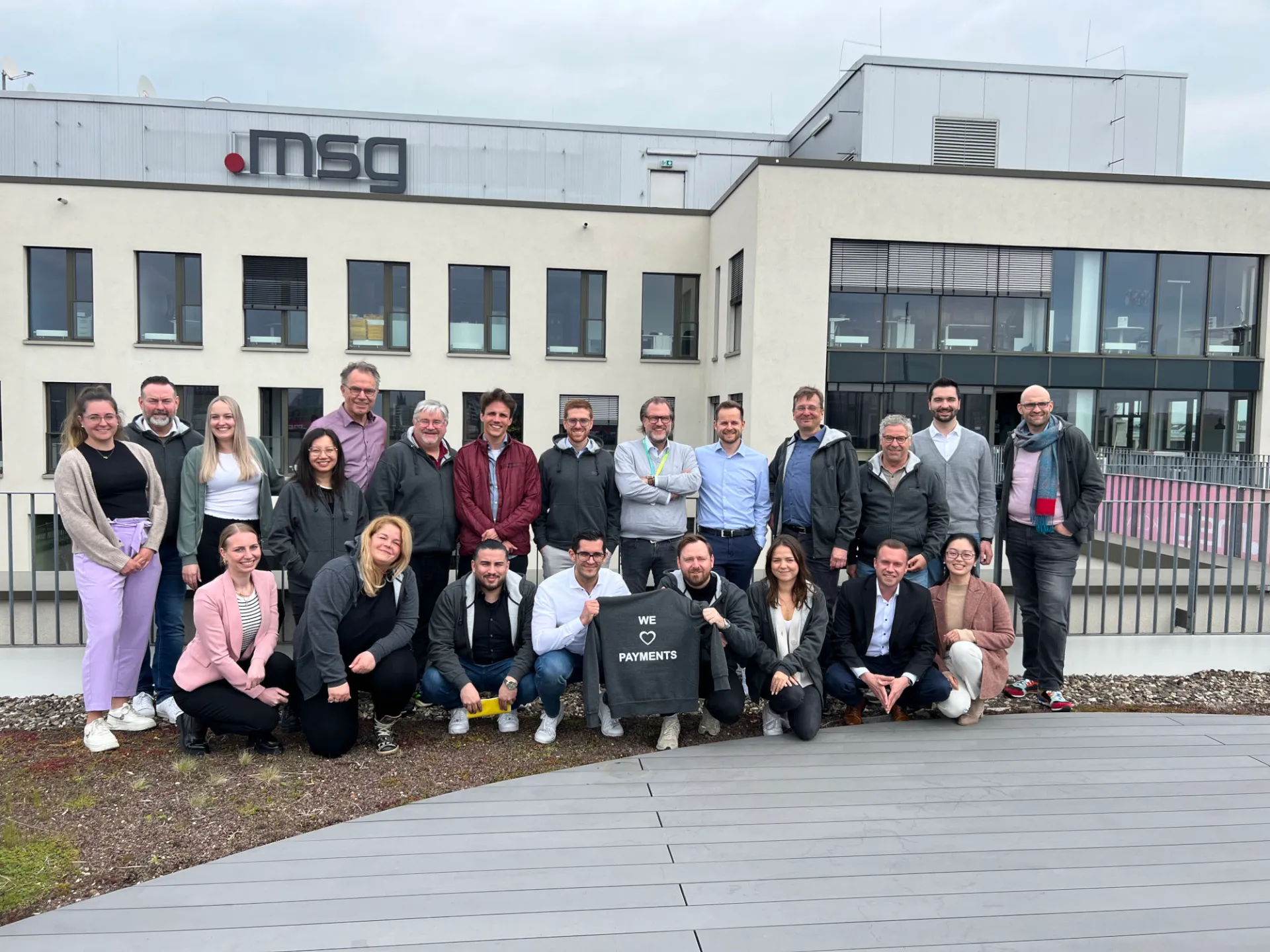
Become part of the team
Our Payments team is dynamic, collaborative and drives innovative solutions. Together, we are shaping the future of payments.
What sets us apart is our open corporate culture, the flat hierarchies, our team spirit, the unique mix of professionalism and fun and much more.
Click here to view our current job vacancies:
Students and graduates:
Junior Consultant Payments / Banking (all genders)
Young professionals and experts:
(Senior) Business / IT Consultant for Payments / Banking (all genders)



Contact

heads the Payments division at msg for banking and has many years of professional experience in the financial services industry and payment transactions.