







Sustainability – from niche topic to centre stage
The fight against climate change and the protection of our ecosystems are among the greatest challenges of the 21st century. Everyone has a role to play here, and we as a company are also doing our part. That is why sustainability in its various facets is so important to our business activities.
msg for banking – Sustainability is a tradition for us and has many facets
For us, sustainability means conserving resources, whereby we understand resources to mean not only material resources, but also human resources, such as the labour, health and motivation of our employees, as well as social resources, such as trust, support, jobs, etc.
In this sense, sustainability has always played an important role in our more than 100-year company history. For many decades, we have been offering people secure jobs at our locations. We are committed to safeguarding and promoting the health of our employees, attach great importance to fair working conditions and cultivate trusting and long-term relationships with our customers.
On our path to sustainable business practices, msg for banking, as a company of the msg Group, follows the internal Roadmap 2025. In this roadmap, the Group companies based in Germany have set themselves the goal of halving their CO₂ emissions from the current level of approximately 17,000 tonnes of CO₂ (value according to the Greenhouse Gas Protocol, Scope 1-3). In terms of electricity, 98.9% of msg locations have already switched to green electricity. msg aims to be climate neutral by 2030.
With our portfolio of services comprising high-quality IT solutions and sound consulting, we support the banking industry in complying with sustainability criteria and offering its customers sustainable products.
Because inclusive and sustainable business practices are important to us

msg for banking participates in the UN Global Compact
msg for banking ag participates in the UN Global Compact initiative – a voluntary leadership platform for the development, implementation and disclosure of responsible business practices.
Founded in 2000, the UN Global Compact pursues the vision of a more inclusive and sustainable economy for the benefit of all people, communities and markets, today and in the future. With their accession, more than 22,200 companies and organisations from civil society, politics and science in more than 170 countries have already joined this vision. Now msg for banking has too!
Frank Schlottmann - Executive Board msg for banking
"We are proud that, as a participant in the UN Global Compact, we can make an important contribution to shaping a more sustainable, transparent and fairer world. In doing so, we commit ourselves to incorporating the ten universally accepted principles in the areas of human rights, labour, the environment and anti-corruption into our daily decision-making and to shaping our actions in such a way that our working methods and strategies are in line with these principles. "
The ten principles of the UN Global Compact
1. Businesses should support and respect the protection of internationally proclaimed human rights.
2. Businesses should make sure that they are not complicit in human rights abuses.
3. Businesses should uphold the freedom of association and the effective recognition of the right to collective bargaining.
4. Businesses should uphold the elimination of all forms of forced labour.
5. Businesses should uphold the abolition of child labour.
6. Businesses should uphold the elimination of discrimination in respect of employment and occupation.
7. Companies should follow the precautionary principle when dealing with environmental issues.
8. Companies should take initiatives to promote greater environmental awareness.
9. Companies should accelerate the development and dissemination of environmentally friendly technologies.
10. Businesses should work against all forms of corruption, including extortion and bribery.
What sustainability means for us in concrete terms

Software suite for sustainable property valuation
In collaboration with the Fraunhofer Institute for Building Physics IBP, we have developed a prototype software suite that combines the life cycle assessment and economic evaluation of buildings in a life cycle-oriented model. This allows sustainability and future costs to be assessed at building level using reliable data from a single source and put to immediate use.
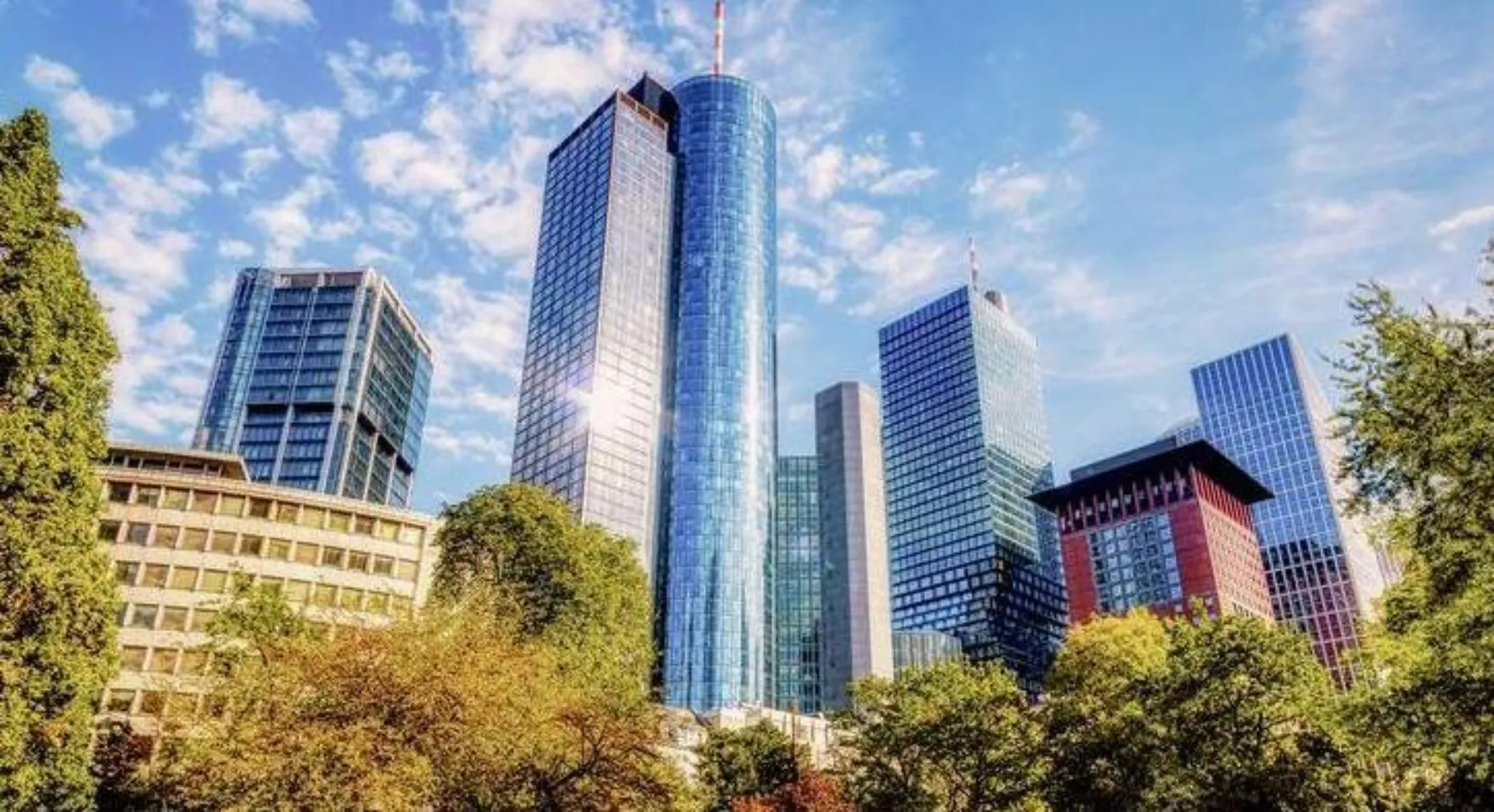
Sustainable finance
Our campaign focuses on the topic of sustainable finance, because banking and sustainability are more closely linked than might appear at first glance.
As part of our consulting and training services, we advise and train banks on how to implement the sustainability requirements of the supervisory authorities.
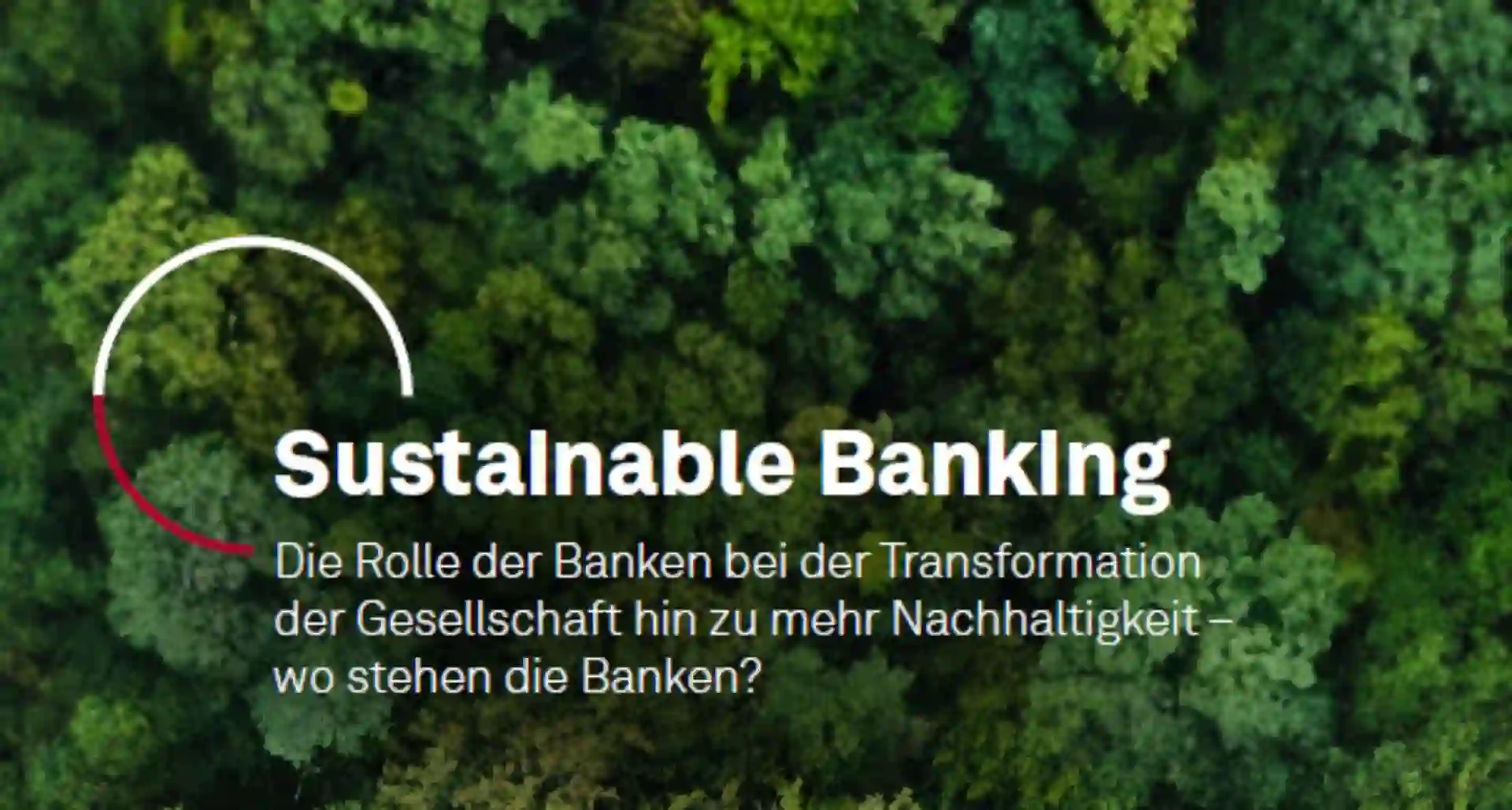
Update: Sustainable Banking 2024 Study
With the update to the Sustainable Banking Study, we analyse where banks in Germany and Austria stand in terms of implementing sustainable banking and sustainable finance. References to our detailed study from previous years also show the progress made in the banking industry in implementing sustainability efforts and the extent to which attitudes towards selected issues have changed significantly.
Active climate protection
Internal sustainability projects
We actively support the Bergwaldprojekt e.V. with several tree planting campaigns in the Frankfurt am Main and Munich areas.
#100years100 trees
As part of an internal ideas competition for sustainable behaviour to mark our 100th anniversary in 2020, we rewarded every sustainability project implemented by our employees with a tree donation.
Sustainability and climate protection at our locations
- Today, 98.9% of msg locations have already switched to green electricity.
- And our Frankfurt am Main location is certified as bicycle-friendly.
Promoting sustainable behaviour among employees
- Company car policy: E-cars and hybrid vehicles are promoted as company cars.
- JobRad: the environmentally friendly and health-promoting alternative to the car – for business and private use.
- Clean desk policy: paperless working first.




Your contact person
is an expert in internal and external communications and heads up the marketing department at msg for banking.